vision-research.eu - The Gateway to European Vision Research



You are here: vision-research.eu » Vision Research » Vision in the European Focus » 2009 » European Elections 2009
Twenty-seven countries, one election
Yes, you. You decide. By voting.
By voting in EP elections, you choose who influences your future and the daily life of close to 500 million fellow Europeans. If you don’t bother, somebody else will - and decide who represents you at the only directly elected Pan-European assembly. Elected MEPs shape the future of Europe for 5 upcoming years. Get the Europe you want!
Your MEP is your voice in Europe - why would you let it go to waste? Elected every five years, the European Parliament is a major and powerful player in European Union decision-making. Its votes shape final EU legislation that influences our everyday life including the future of European Research.
The ‘Gateway to Vision Research’ contacted in total 100 MEPs and candidates from all member states on May 4th and May 5th 2009. We forwarded three questions in relation to the future of research and more specifically blindness and visual impairment in Europe. The deadline for replies was May 18th, 2009; 18:00h CET.
Thank you to all candidates, who answered our questions in time, despite the ongoing election campaign.
Learn more about their answers
(in alphabetical order)
Liam Aylward
Question
What are your most important points to foster research in Europe?
Answer
I think that many - indeed most - Member States have very good programmes in place to foster research at home. Where Europe can play a role, however is encouraging cross-border cooperation and collaboration. Research by its very nature needs new ideas and fresh ways of thinking. The European Union offers a unique opportunity for Member States to benefit from the ideas and methods of their neighbours in the field of research.
A very valuable programme to further the goal of inter-European research collaboration is the seventh Framework Programme (FP7), under which €32,413 million is allocated to a Cooperation programme, designed to support cooperation and collaborative research between universities, industry, research centres and public authorities throughout the EU. FP7 envisages the establishment of networks of excellence and similar projects. In my opinion programmes such as FP7 that actively encourage such research collaboration are the best way forward for fostering research in Europe
Question
In the year 2000, the EU decided to create the European Research Area (ERA). Since then many initiatives have been taken by the EU and Member States. But there are still strong national and institutional barriers which prevent ERA from becoming a reality. What would be your primary activities in the new-elected EP to enhance the overall governance of ERA?
Answer
I am not sure that national and institutional barriers are the only problem here. Many research bodies are unaware of the potential and opportunity that the ERA and other European initiatives offer. If re-elected I will be pushing for the European institutions - and for relevant bodies and authorities in Member States - to step up information and awareness campaigns and to reach out more to research bodies and to individuals that could benefit from the workings of a successful ERA and from other EU initiatives in this area.
As to the national and institutional barriers themselves: the European Institutions are well aware of the challenges and difficulties that face the ERA, and this is acknowledged in the 2007 Green Paper on the issue. There are indeed barriers to the progression of the ERA but these are by no means insurmountable. By working together we can build a unified and dynamic research area in Europe.
Question
There is no structured European Action Plan for the prevention of avoidable blindness and visual impairment available yet. Would you support such an initiative in the new European Parliament?
Answer
I welcome all initiatives that highlight the welfare and concerns of EU citizens. In my time as an MEP I have come to appreciate just how important it is that citizens and interest groups engage with European policy makers to ensure that groups in our society and in our communities and supported and protected. The EU today is a Europe of the people and a Europe for the people. Anything that is the EU can do and that is within its competences - support for vision research, information and awareness, cooperation on medical best practice etc - can only be positive and should be welcomed.
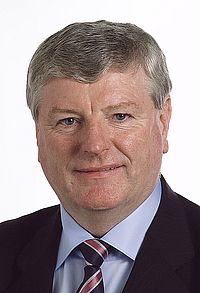
Liam Aylward
Bât. Altiero Spinelli
04F349
60, rue Wiertz / Wiertzstraat 60
B-1047 Bruxelles/Brussel
Tel. : +32 (0)2 28 45782
Fax : +32 (0)2 28 49782
liam.aylward[at]europarl.europa.eu
Dr. Jorgo Chatzimarkakis
Question
What are your most important points to foster research in Europe?
Answer
The most important points are the ERA, EIT, FP7, the nobility of researchers and the freedom of knowledge as the 5th freedom in the EU.
Question
In the year 2000, the EU decided to create the European Research Area (ERA). Since then many initiatives have been taken by the EU and Member States. But there are still strong national and institutional barriers which prevent ERA from becoming a reality. What would be your primary activities in the new-elected EP to enhance the overall governance of ERA?
Answer
To enhance the overall governance of ERA it would be necessary to cut down the red tape for reseachers as it was already done by the EP concerning FP7.
Question
There is no structured European Action Plan for the prevention of avoidable blindness and visual impairment available yet. Would you support such an initiative in the new European Parliament?
Answer
Indeed I would support such an initiative in the newly elected European Parliament as a structured Action Plan is absolutely necessary.
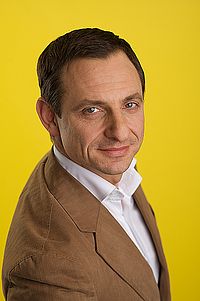
Dr Jorgo Chatzimarkakis
Bât. Altiero Spinelli
10G116
60, rue Wiertz / Wiertzstraat 60
B-1047 Bruxelles/Brussel
Tel. : +32 (0)2 28 45149
Fax : +32 (0)2 28 49149
jorgo.chatzimarkakis[at]europarl.europa.eu
Dr. Ingeborg Gräßle
Question
What are your most important points to foster research in Europe?
Answer
I think that there are too many different programs and funds at the moment which make it very difficult for individual researchers and research institutions to find a funding that suits their purpose. I think that the Commission needs to give a better overview and more guidance for funding. Furthermore, the rules of participation as they are at the moment are to complex so that a lot of researchers do not have the necessary resources to fulfill all obligations and therefore even abstain from applying for EU funds. A simplification and consolidation of these rules are absolutely necessary to foster European research.
Question
In the year 2000, the EU decided to create the European Research Area (ERA). Since then many initiatives have been taken by the EU and Member States. But there are still strong national and institutional barriers which prevent ERA from becoming a reality. What would be your primary activities in the new-elected EP to enhance the overall governance of ERA?
Answer
As standing rapporteur for the financial regulation, my aim for the new legislature is to reduce the number of financial rules and prescriptions for more legal certainty and les contradictions. This will also be an important step in the preparation of the next framework program. In my opinion, we should integrate the funding possibilities that exist at the moment outside the framework program in to the next FP so that comparable rules apply for all kind of researchers.
Question
There is no structured European Action Plan for the prevention of avoidable blindness and visual impairment available yet. Would you support such an initiative in the new European Parliament?
Answer
No, for reasons of subsidiarity.
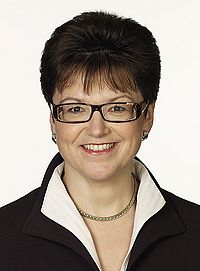
Dr. Ingeborg Gräßle
Bât. Altiero Spinelli
15E130
60, rue Wiertz / Wiertzstraat 60
B-1047 Bruxelles/Brussel
Tel. : +32 (0)2 28 45868
Fax : +32 (0)2 28 49868
ingeborg.graessle[at]europarl.europa.eu
Dr. Paul Rübig
Question
What are your most important points to foster research in Europe?
Answer
For me as an MEP, who was significantly involved in the 7th Framework research program, of course, a further expansion in this segment is my goal . I will ensure that an 8th Framework research program is launched, which should increase the current existing funding a further 100% to ensure adequate funding for the research in Europe.
Question
In the year 2000, the EU decided to create the European Research Area (ERA). Since then many initiatives have been taken by the EU and Member States. But there are still strong national and institutional barriers which prevent ERA from becoming a reality. What would be your primary activities in the new-elected EP to enhance the overall governance of ERA?
Answer
I will fight for "better governance" concerning the research market and have set myself the target of the breaking the bureaucracy in the jungle of funding.
Question
There is no structured European Action Plan for the prevention of avoidable blindness and visual impairment available yet. Would you support such an initiative in the new European Parliament?
Answer
I would absolutely appreciate and support such action for this plan.
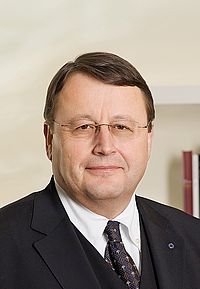
Dr. Paul Rübig
ASP 8F 171
Rue Wiertz 60
B-1047 Brüssel
T: +32 2 284 77 49
Fax: +32 2 284 97 49
paul.ruebig[at]europarl.europa.eu